Digital Bookshelf
Assigned textbooks, reading materials, lessons, and educational content can remain organized around the student’s classes and learning needs.
Platform
A school day creates thousands of learning moments.
A chapter read. A question asked. A note written. An assignment submitted. A concept misunderstood. A teacher’s comment that suddenly makes everything click.
Most systems store these moments in different places.
READTYCH is being built to connect them.
The READTYCH education platform brings books, notes, classes, assignments, assessments, communication, approved applications, and learning insights into one blended learning platform.
Not another login.
Not another dashboard.
A living educational environment built around the learner.
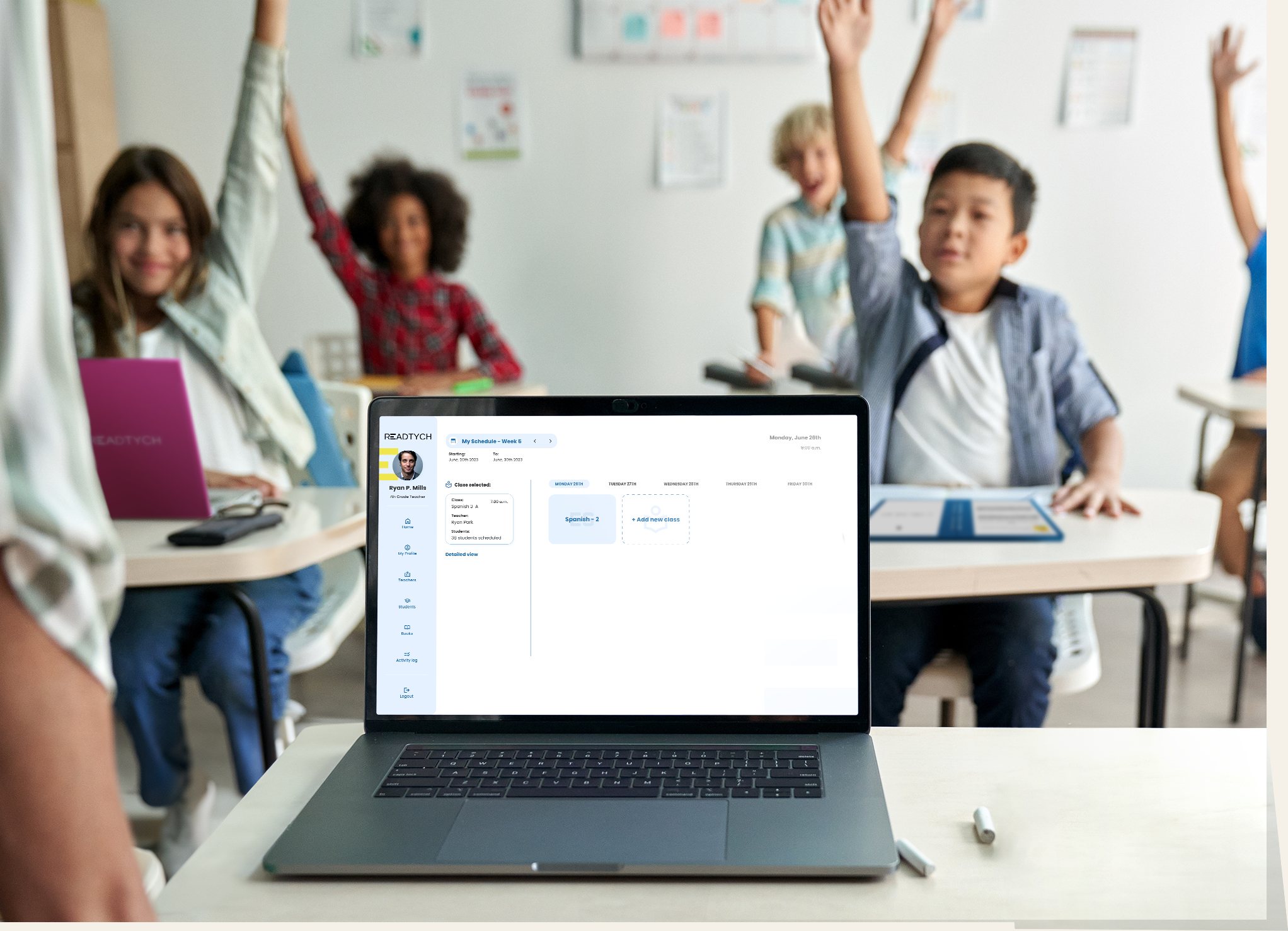
A student reads from one application, takes notes somewhere else, downloads an assignment from a portal, submits it through another system, and searches a crowded inbox for feedback.
The teacher moves through an entirely different maze.
A learning management system. A grading tool. A communication platform. A digital library. Attendance records. Assessment software. Separate applications for separate subjects.
School leaders receive information from all of them, often after the moment to act has passed.
The problem is not a lack of technology.
The problem is that the technology rarely understands what happened before or what needs to happen next.
READTYCH is being designed to reconnect the school day.
One platform where learning materials, student work, teacher feedback, and academic progress can begin to make sense together.
Learning does not begin when an assignment is submitted. It does not end when a grade is recorded.
It moves through a series of connected moments.
A teacher introduces an idea. A student reads about it, writes notes, completes an activity, receives feedback, tries again, and builds understanding over time.
The READTYCH education platform is being developed to keep those moments connected.
Assigned textbooks, reading materials, lessons, and educational content can remain organized around the student’s classes and learning needs.
Students can create handwritten or typed notes and connect them to a particular book, lesson, course, or idea.
Course materials, activities, announcements, deadlines, and teacher communication can live within one academic workspace.
Teachers can distribute work, connect it with the right learning resources, review submissions, and return grades and feedback through the same environment.
Schools can make approved learning tools available without sending students into an unrestricted consumer application store.
Assignments, assessments, feedback, attendance, and academic activity can contribute to a longer view of how a student is progressing.
Everything has its own place.
More importantly, everything understands what it belongs to.
Many platforms begin with features.
READTYCH begins with a student moving through a real school day.
What does the student need to read?
What are they being asked to do?
Which notes could help?
When is the work due?
What feedback did the teacher provide?
Which concepts keep causing difficulty?
What could help the student move forward?
The platform is intended to bring those answers into one connected experience.
Students should not need to become experts at managing school technology before they can begin learning.
They should be able to open READTYCH and understand:
The technology fades into the background.
The learning comes forward.
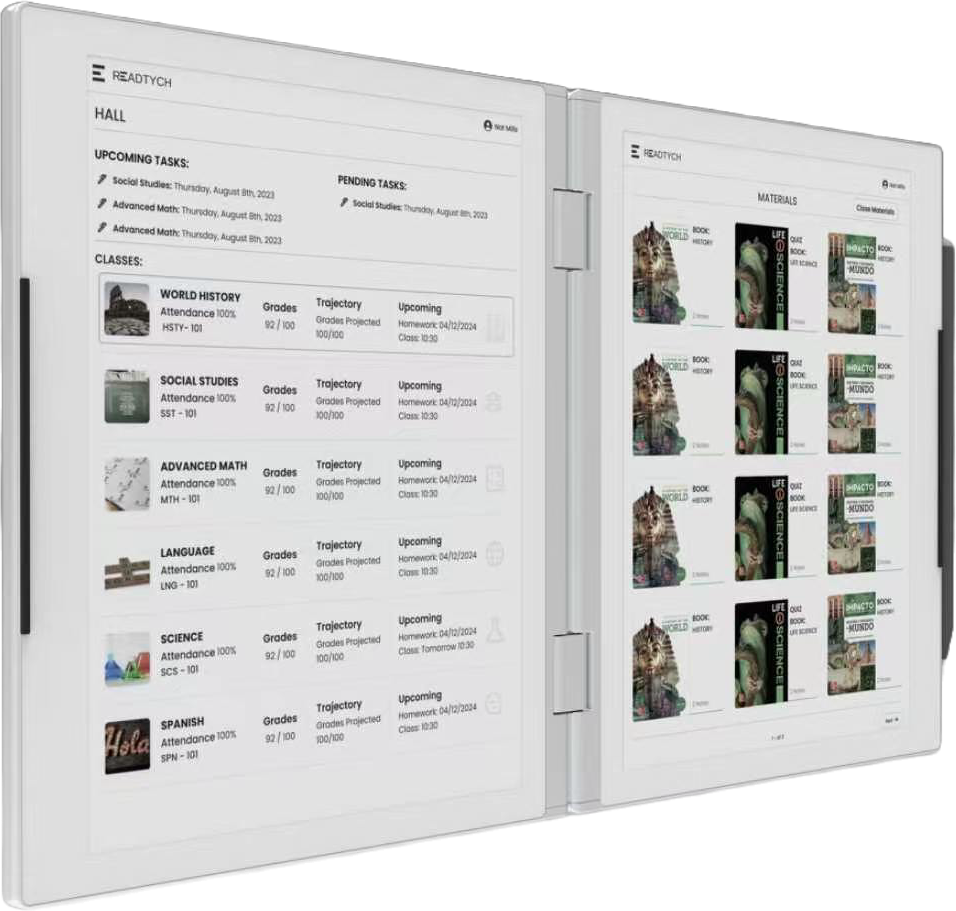
Most education systems can tell a school that an assignment was submitted.
READTYCH is being designed to tell a more useful story.
An educator prepares or selects a lesson, reading, assignment, quiz, test, or classroom activity.
The teacher can attach the right book, chapter, notes, instructions, educational application, or reference material.
The assignment appears with the information and resources needed to begin.
Using the READTYCH Digital Book, the student can keep the lesson or question open on one screen while writing, reviewing notes, or completing the response on the other.
The student submits the completed activity through the connected platform.
The educator evaluates the work, considers AI-assisted suggestions where appropriate, and provides feedback.
The response becomes part of the student’s learning environment rather than disappearing into a separate grading system.
Over time, the platform may help authorized users recognize strengths, repeated difficulties, incomplete work, and changes in performance.
The goal is not simply to move assignments faster.
It is to help learning move forward.
Teachers do not need another platform that calls itself simple and then adds three more hours of administration.
They need technology that understands the weight of the work they already carry.
READTYCH is being developed to support educators as they:
AI-assisted tools may help with handwriting recognition, repetitive grading tasks, feedback suggestions, and the identification of learning patterns.
But the platform does not remove the educator from the decision.
The teacher understands the student, the classroom, and the context behind the work.
Technology can help carry the workload.
Judgment stays human.
Artificial intelligence is entering education quickly.
That makes one question more important than ever:
Who remains responsible for the decision?
At READTYCH, the answer is clear.
The educator.
READTYCH’s learning intelligence direction includes tools that may assist with:
Handwritten notes and responses may be converted into organized, searchable digital content.
The system may suggest a possible grade or response for written work based on educator-reviewed examples.
AI may help educators identify common errors or prepare feedback for teacher review.
The platform may identify repeated difficulties, missed assignments, changing performance, or subjects that need attention.
Students may receive relevant practice materials or recommendations based on their work and educator-approved learning goals.
The teacher can approve, change, or reject any academic suggestion.
AI does not get the final word.
It helps the right person reach a better-informed decision.
A grade is the end result of a much longer story.
A student may understand the concept but struggle with the format. Another may perform well on short tests but repeatedly miss written assignments. A difficulty may appear slowly across several lessons before it becomes visible in a final score.
READTYCH is being designed to help authorized users see the patterns behind the number.
Courses, assignments, feedback, grades, strengths, incomplete work, and areas that may need more attention.
Individual and class performance, commonly missed concepts, overdue work, and changes in learning patterns.
Relevant classroom, grade-level, attendance, subject, and assignment trends across the school.
Authorized patterns across schools that may help guide resources, training, and student support.
Approved system-level information that may support broader educational planning.
Each user sees the information appropriate to their role.
The purpose is not to turn a student into a set of data points.
It is to make sure a student who needs support is less likely to remain invisible.
A student’s academic story is usually divided by semesters, teachers, systems, and school years.
Important context can disappear each time one system ends and another begins.
READTYCH is working toward a more continuous learning history.
With the right permissions and safeguards, the platform may connect information across:
This longer view can help educators understand not only where a student is today, but how they arrived there.
It can also help prevent one difficult test or one successful assignment from becoming the entire story.
Progress deserves context.
So does struggle.
The READTYCH Digital Book gives students a focused place to read, write, and complete their work.
The education platform connects that work with the wider school environment.
Together, they can bring:
The hardware and software are not separate READTYCH stories.
The Digital Book is where the student experiences the platform.
The platform is what allows each learning moment to connect with the next.
Schools use valuable third-party educational applications. The problem is that these tools often sit outside the main learning environment, require separate access, and compete with unrelated consumer applications.
READTYCH is developing a controlled educational application ecosystem.
Schools can determine which applications and resources are available to their students. Approved tools can become part of the connected learning experience without opening the door to unrelated social media, entertainment, and consumer games.
For schools, this can create greater consistency and control.
For students, it means useful tools are easier to find.
For educational application developers, it creates a focused pathway to institutions and learners.
The goal is not to build a wall around learning.
It is to give learning tools a better place to work together.
Classroom learning and digital learning are often treated as two separate experiences.
A blended learning platform should not ask students to choose between them.
READTYCH is being designed to support teacher-led classroom instruction, independent reading, handwritten work, digital assignments, educational applications, and connected feedback within one environment.
Students can still write.
Teachers still lead.
Books still matter.
Discussion still matters.
Digital technology supports the experience without taking over the experience.
That is what blended learning can look like when the blend feels natural.
Education technology succeeds when it fits the people, routines, responsibilities, and realities of a school.
That is why READTYCH is preparing for pilot-focused collaboration.
A pilot can help explore:
READTYCH welcomes conversations with schools, charter networks, school districts, state education agencies, universities, researchers, publishers, and educational technology partners.
The platform is being built with a bold vision.
Its value will be shaped in real classrooms.
The READTYCH education platform is a connected environment being developed for books, notes, classes, assignments, assessments, communication, approved educational applications, and learning insights. It works alongside the READTYCH Digital Book.
Yes. READTYCH is being designed as a blended learning platform that connects teacher-led instruction, reading, handwriting, classroom activity, digital assignments, educational applications, and feedback.
Teachers may use the platform to distribute learning materials, manage assignments, review student work, communicate feedback, monitor progress, and identify areas where students may require more support.
READTYCH is developing AI-assisted capabilities for handwriting recognition, grading suggestions, feedback support, performance insights, and personalized learning recommendations. Educators remain responsible for academic decisions.
The platform is intended to support a controlled educational application environment. Schools can determine which approved applications and learning resources are available to students.
READTYCH is progressing through software and hardware development while preparing for pilot opportunities. Schools, districts, education agencies, and partners can contact the team to discuss potential participation.
The next page starts here
The book knows what the student is reading.
The notebook knows what they are thinking.
The assignment knows what they were asked to do.
The feedback knows where they need to go next.
Until now, those pieces have rarely known one another.
READTYCH is building the connection between them.
One student.
One learning journey.
One platform that helps every authorized person see how to move it forward.