Single Sign-On
Users may be able to access READTYCH through an institutionally approved identity provider rather than managing another separate password.
Platform
Schools do not begin their technology journey with READTYCH.
They already have systems for student information, learning management, identity, educational content, communication, assessment, reporting, and device administration.
READTYCH is being developed to connect with that existing environment so information, learning materials, educator workflows, and approved tools can move more naturally across the school day.
The goal is not to force every institution into an entirely new ecosystem. It is to understand which existing systems matter, what information needs to move, and where a meaningful connection could make the school day less fragmented.
Integrations should not exist simply to make a product list longer.
They should help students begin with the right materials, help educators keep their workflows connected, and help institutions manage technology with greater confidence.
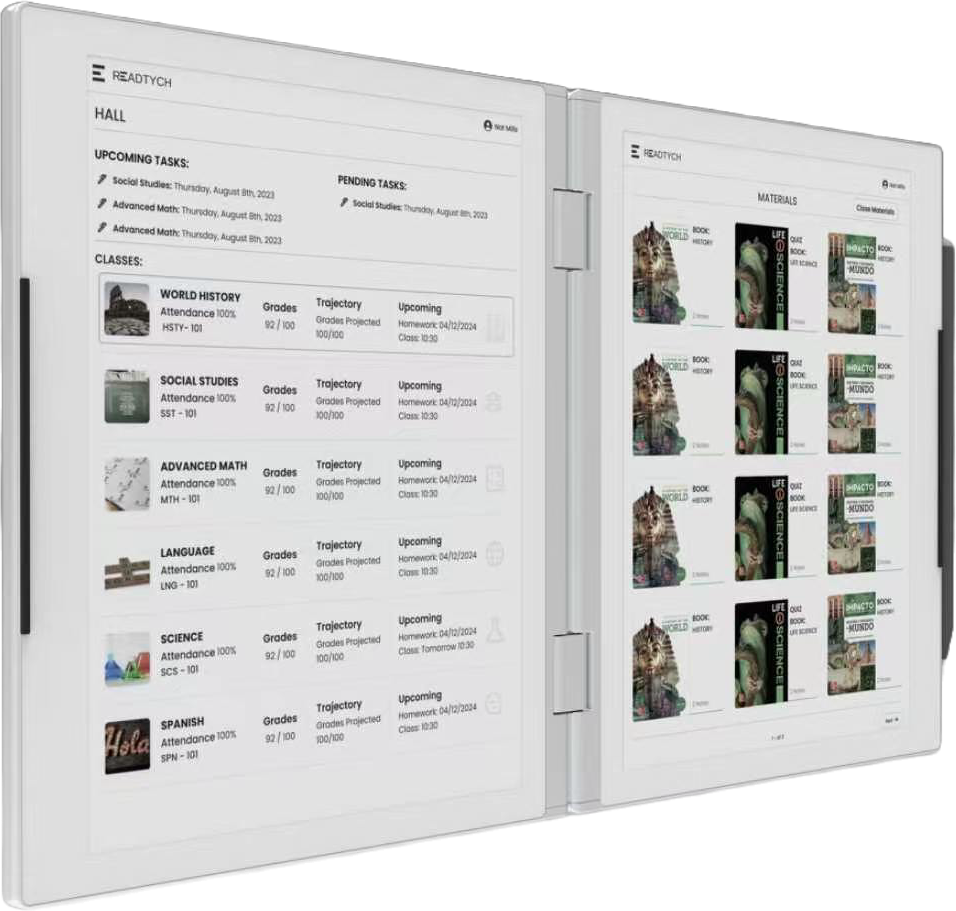
A connection between two systems is useful only when it improves what happens for the people using them.
A student should not need to sign in again simply because the assignment moved from one platform to another.
An educator should not have to enter the same class, assignment, or grade in several places.
A school technology team should not need to manually recreate accounts that already exist in an approved institutional system.
A district should not receive several conflicting versions of the same information.
READTYCH is exploring integrations that may help connect the Digital Book and education platform with the systems schools already rely on.
The purpose is straightforward:
The right integration is not always the one that moves the most data.
It is the one that moves the right information for a clear educational purpose.
Two schools may use the same learning management system and still need different connections.
One institution may want single sign-on and course information. Another may need assignments and grades to move between platforms. A third may be evaluating READTYCH within a limited pilot and require no deep integration at the beginning.
Integration planning should begin by asking:
READTYCH should fit the institution’s approved technology environment.
The institution should not have to redesign everything before the first classroom can begin.
Students, educators, administrators, and technology teams need the right access from the moment they enter the platform.
READTYCH is evaluating identity and access connections that may support:
Users may be able to access READTYCH through an institutionally approved identity provider rather than managing another separate password.
Approved student, educator, and administrator accounts may be created or updated using information from an authorized institutional source.
A user’s school, class, course, and institutional role may help determine which tools and information are available.
Access may be removed or updated when a student leaves, an educator changes roles, or an account is no longer authorized.
Larger programs may require users and permissions to be organized across schools, districts, departments, or other approved institutional structures.
Identity integration is not only about convenience.
It helps establish who the user is, what they are permitted to do, and which learning environment belongs to them.
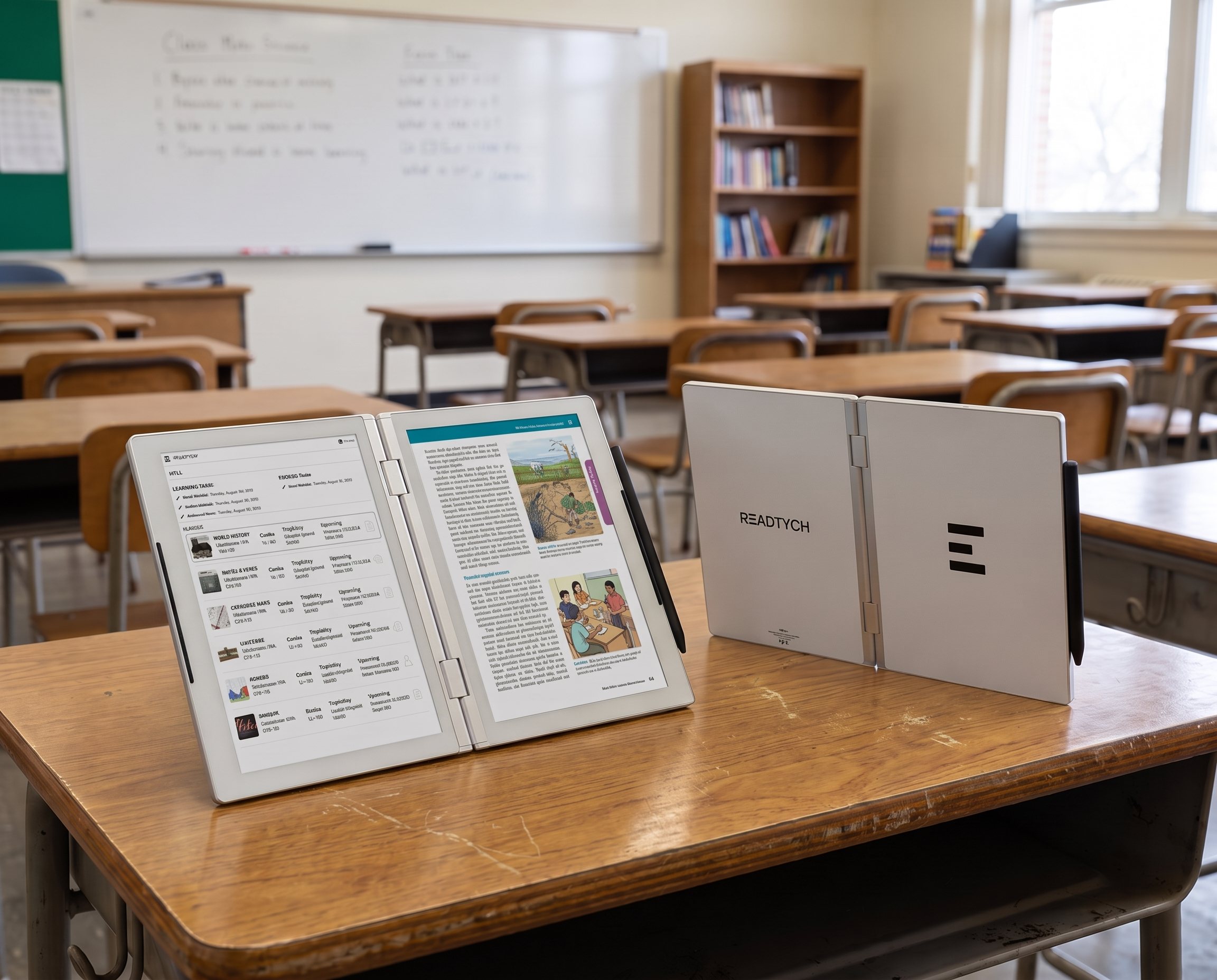
Many schools already use a learning management system to distribute material, manage assignments, communicate, and record academic activity.
READTYCH is not being developed under the assumption that every learning management system will disappear.
Depending on institutional needs and technical feasibility, a connection may help support:
The scope should be defined carefully.
Some institutions may want READTYCH to complement the existing learning management system. Others may want to test whether selected workflows can take place more naturally inside the READTYCH environment.
The answer depends on the institution’s current systems, educator needs, implementation goals, and the capabilities ready for evaluation.
A student information system often holds important institutional records such as enrollment, grade level, school, course participation, and other authorized information.
READTYCH may need selected information from that system to organize users, classes, roles, and institutional structures correctly.
Potential integration areas may include:
The student information system may remain the authoritative source for core institutional records.
READTYCH should receive only the information reasonably necessary for the approved purpose. Access, synchronization, retention, correction, and deletion requirements should be defined before information begins moving between systems.
READTYCH is built around the Digital Book, but the value of the device depends on the quality and availability of the material students can open within it.
The ecosystem direction includes potential connections with:
Content integration may involve more than placing a file on the device.
Institutions and content partners may need to consider:
Which students, educators, schools, or districts are permitted to use the material?
How is the content licensed, assigned, renewed, or removed?
Can the material be displayed and used appropriately across the two E-Ink screens?
Can students highlight, write, or connect notes with the content?
Can an educator link a chapter, passage, diagram, or resource to a classroom activity?
Can approved content remain accessible when a continuous connection is unavailable?
How should copyrighted or licensed material be protected?
A digital book becomes more valuable when the content, notes, assignments, and educator feedback understand how they relate to one another.
Schools use specialized applications for literacy, mathematics, science, language learning, accessibility, assessment, research, and other educational needs.
READTYCH is developing a controlled application ecosystem through which approved tools may become part of the wider learning experience.
An application connection may support:
Not every application will be appropriate for the Digital Book.
Compatibility may depend on the application’s display requirements, interaction model, E-Ink behavior, operating requirements, privacy practices, licensing, network use, accessibility, and educational value.
READTYCH will evaluate applications according to the learning experience and technical environment they require.
The goal is not to recreate an unrestricted consumer application store.
It is to give useful educational tools a more connected place to work.
Assignments and assessments often move through several systems before a student receives feedback.
An educator creates the activity in one place. The student opens it somewhere else. The response enters another system. The grade is recorded separately. Feedback may arrive through email or a portal.
READTYCH is being developed to connect more of that journey.
Depending on the institution and integration scope, this may include:
An integration should preserve the educator’s control over academic decisions.
AI-assisted suggestions, automated scoring, and synchronized grades should operate within clearly approved workflows.
Schools and districts often receive information from several platforms.
Different systems may define completion, engagement, performance, or participation differently. Combining the information without understanding those differences can create a misleading picture.
READTYCH is exploring reporting connections that may help institutions use authorized learning information more effectively.
Potential areas may include:
Before information is exchanged, institutions should understand:
A dashboard should not become more convincing than the information behind it.
Schools need more than student-facing features.
Technology teams must be able to understand how devices are prepared, assigned, configured, updated, supported, and removed from service.
READTYCH’s institutional direction may require connections or administrative tools supporting:
The final approach will depend on the production device, deployment scale, institutional requirements, and device-management capabilities ready for validation.
Operational needs should be included in integration planning from the beginning.
A device is not truly integrated into a school when only the student can use it.
The institution must also be able to manage it responsibly.
Learning depends on timely communication.
Students need to know when work is due, when instructions change, and when feedback has arrived. Educators need to communicate with the appropriate students and classes. Schools may need to share relevant announcements or updates.
READTYCH may support communication through its own platform and selected connections with approved institutional systems.
Potential notification areas may include:
Notifications should be relevant, understandable, and appropriate to the user’s role.
A connected system should reduce noise.
It should not create another stream of messages students and educators learn to ignore.
A connected education ecosystem may require approved systems to exchange information through application programming interfaces, commonly called APIs, or other interoperability methods.
The READTYCH architecture is being developed with future institutional and partner connections in mind.
Depending on technical readiness, integration methods may support:
The existence of an API does not automatically make an integration safe, useful, or complete.
Each connection must be evaluated for:
Interoperability should make systems work together without weakening institutional control.
Every integration creates a path through which information may move.
Before that path is opened, the institution and READTYCH should understand what is moving and why.
Integration planning should define:
Which system creates or controls the original information?
Which system needs the information, and what will it do with it?
Which educational, administrative, technical, or support need does the exchange serve?
Does the information move immediately, periodically, or only after an authorized action?
Who has approved the exchange?
Which users and systems may view or use the information?
How long is the information needed?
What happens when information is inaccurate, incomplete, or inconsistent?
What happens when the pilot, contract, account, or integration ends?
Moving more information does not automatically create a smarter system.
A responsible integration moves only what is needed and keeps the institution informed.
An integration can extend the value of a platform.
It can also extend the number of systems, service providers, and technical processes involved in handling student information.
READTYCH’s integration direction includes consideration of:
READTYCH does not intend to sell student personal information or use it for targeted advertising.
Specific data responsibilities should be established through the agreements, privacy notices, technical documentation, and institutional approvals applicable to each integration.
Two systems may be technically capable of exchanging information and still create a poor experience for students or educators.
A complete compatibility review should consider:
Can the systems connect reliably and exchange the required information?
Does the connection fit how educators and students actually work?
Can books, documents, applications, and activities function appropriately on the two-screen E-Ink device?
Do the systems use information in ways that meet institutional and legal requirements?
Can access, communication, and system behavior be protected appropriately?
Can students and educators with different needs use the connected experience?
Can technology teams support, monitor, troubleshoot, and maintain the connection?
Do licensing, support, pricing, ownership, and contractual terms align?
An integration should not be declared successful when the systems connect.
It should be considered successful when the people using them experience less friction.
READTYCH’s ecosystem may involve several kinds of institutional and technology partners.
Connections may support identity, rosters, courses, content, assignments, reporting, and administration.
Larger programs may require approved system-level structures, regional roles, reporting, data governance, and phased deployment.
Integrations may support licensing, distribution, annotation, assignment, content protection, and access management.
Approved applications may connect with student access, courses, assignments, learning activities, and educator workflows.
Research programs may require defined data, consent, governance, de-identification, evaluation methods, and restricted access.
Partners may support infrastructure, connectivity, identity, deployment, technical services, training, or institutional integration.
Different partners bring different responsibilities.
Every connection should begin with the learning or operational need it is intended to solve.
A pilot does not need every possible integration before students can begin using READTYCH.
Trying to connect everything at once may make it harder to understand what the pilot is actually evaluating.
A focused integration plan may include:
Identify what students, educators, and administrators need to do during the pilot.
Document the identity, learning management, student information, content, application, and reporting systems involved.
Separate the integrations required for the pilot from those that may become relevant during wider adoption.
Agree on what information will move, why it is needed, where it will go, and who can access it.
Evaluate data use, permissions, service providers, retention, technical protection, and institutional requirements.
Confirm expected behavior, synchronization, errors, access, performance, and recovery.
Ensure educators, administrators, and technology teams understand the connected workflow.
Track technical issues, workflow friction, user questions, data quality, and unexpected behavior.
Decide which integrations added value, which need improvement, and which are unnecessary.
Integration should grow with the evidence.
Not ahead of it.
You do not need a finished technical specification before contacting READTYCH.
A useful first conversation may begin with:
These questions help READTYCH understand whether an integration is technically possible, educationally useful, and appropriate for the current stage of product development.
READTYCH is evaluating learning management connections for courses, classes, materials, assignments, submissions, grades, and feedback. Compatibility will depend on the institution’s platform, required workflow, available integration methods, and READTYCH product readiness.
Potential student information system connections may support approved account, enrollment, school, grade, course, roster, attendance, or institutional information. The exact data exchange would be defined according to the institution’s needs, permissions, and privacy requirements.
Identity and single sign-on are part of the integration direction. Availability will depend on the institution’s identity provider, technical requirements, security review, and the capabilities ready for the relevant pilot or deployment.
READTYCH welcomes conversations with publishers, content providers, and educational application developers. Compatibility will depend on educational value, technical requirements, E-Ink behavior, licensing, privacy, security, and the proposed institutional use.
READTYCH is developing its platform architecture with future institutional and partner connections in mind. Specific API availability, documentation, access, and supported functions will be confirmed as the platform progresses.
Schools, districts, education departments, and approved partners can discuss their current systems, required workflows, data needs, security requirements, and pilot goals with READTYCH. A focused technical evaluation can identify which connections are essential and appropriate to test.
The next page starts here
A student opens the right class without wondering which system supplied it.
An educator shares an assignment without entering the same information twice.
A technology team manages access without rebuilding accounts by hand.
A school receives the information it needs without losing control of where that information travels.
That is what integration should feel like.
Not another connection to manage.
A more connected learning experience that simply works where it is needed.