Adoption

Be Among the First to Pilot the READTYCH Digital Book

READTYCH is inviting selected schools, districts, education departments, and research partners to explore its two-screen Digital Book and connected learning platform in real education environments.

Test the classroom experience. Help shape the product. Build the evidence for what could come next.

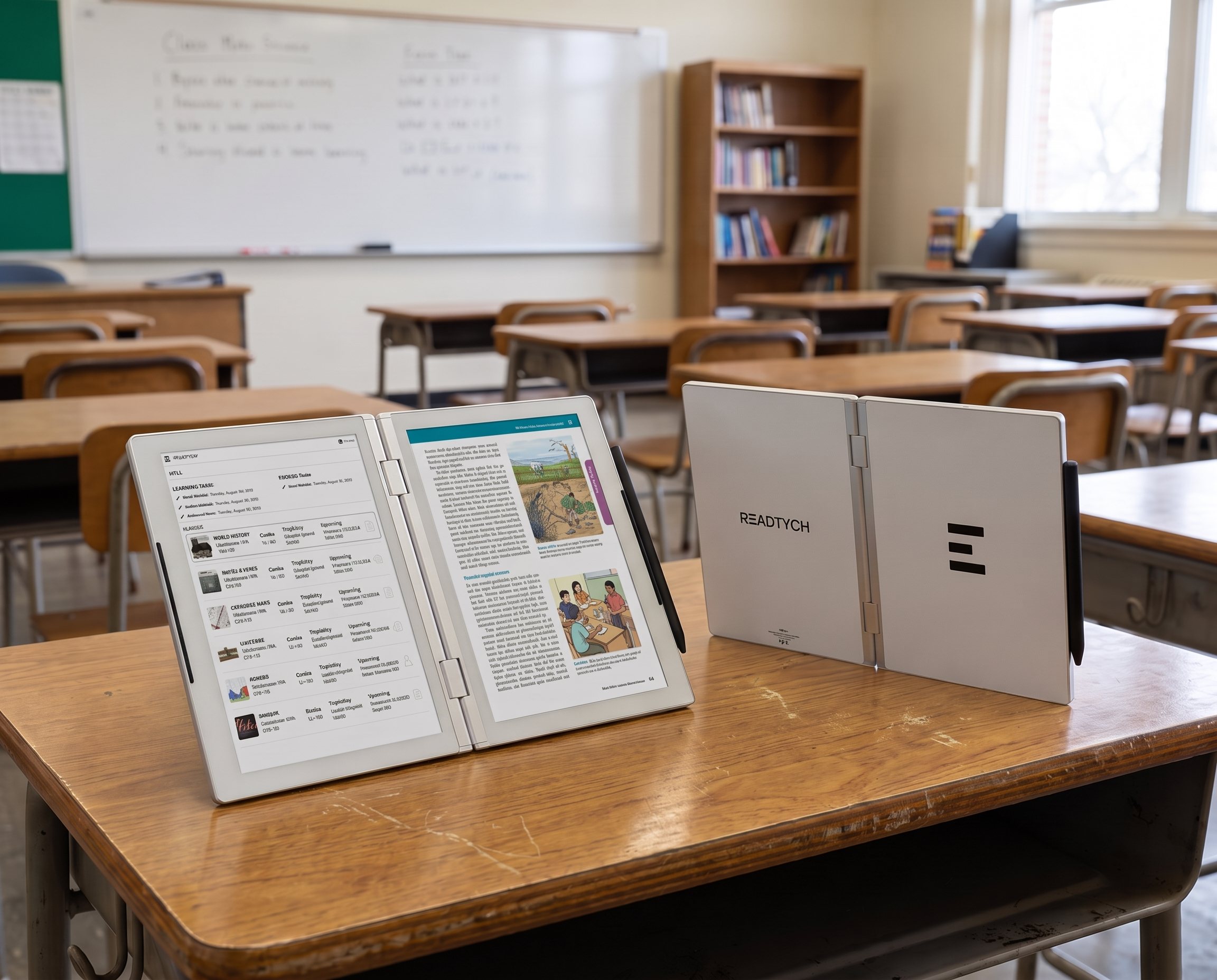
Two READTYCH Digital Books open on a classroom desk, one showing a digital bookshelf and lesson, the other closed.
Chapter I

Why the Future Should Begin in a Real Classroom

The future of education should not arrive in thousands of unopened boxes.

It should begin inside a real classroom.

With a teacher who can say what helps and what creates another step.

With students who can show whether two screens genuinely change the way they read, write, and work.

With school leaders who understand what implementation requires beyond a product demonstration.

The READTYCH Pilot Program allows qualified institutions to evaluate the Digital Book and connected education platform within a defined learning environment.

Not an immediate promise to scale.

A structured way to learn what deserves to scale.

Chapter II

A Pilot Should Answer More Than “Does It Work?”

A product demonstration can show what a device is designed to do.

A pilot reveals what happens when it meets a real school day.

Do students understand the two-screen experience?

Can educators use the platform without adding additional administrative burden?

Does the Digital Book fit naturally into lessons?

Can the school support the devices, content, connectivity, permissions, and training around them?

Which features provide real value?

Which ones still need work?

The READTYCH Pilot Program is being created to answer those questions honestly.

It evaluates more than the device. It looks at the software, classroom workflow, educator experience, student response, institutional readiness, and support required around the technology.

Chapter III

Begin With a Real Educational Need

A strong pilot does not begin with:

“We would like to try the device.”

It begins with a problem worth understanding.

A school may want to reduce the constant switching between textbooks, notebooks, applications, and learning portals.

Educators may need a clearer way to connect lessons, assignments, student responses, and feedback.

A district may be exploring a more focused alternative to general-purpose tablets.

An education department may want to understand how connected learning could work across schools with different resources and connectivity conditions.

A university may want to study two-screen reading, handwriting, educator adoption, or student performance analytics.

READTYCH does not expect an institution to arrive with all the answers.

But the pilot should begin with a meaningful question.

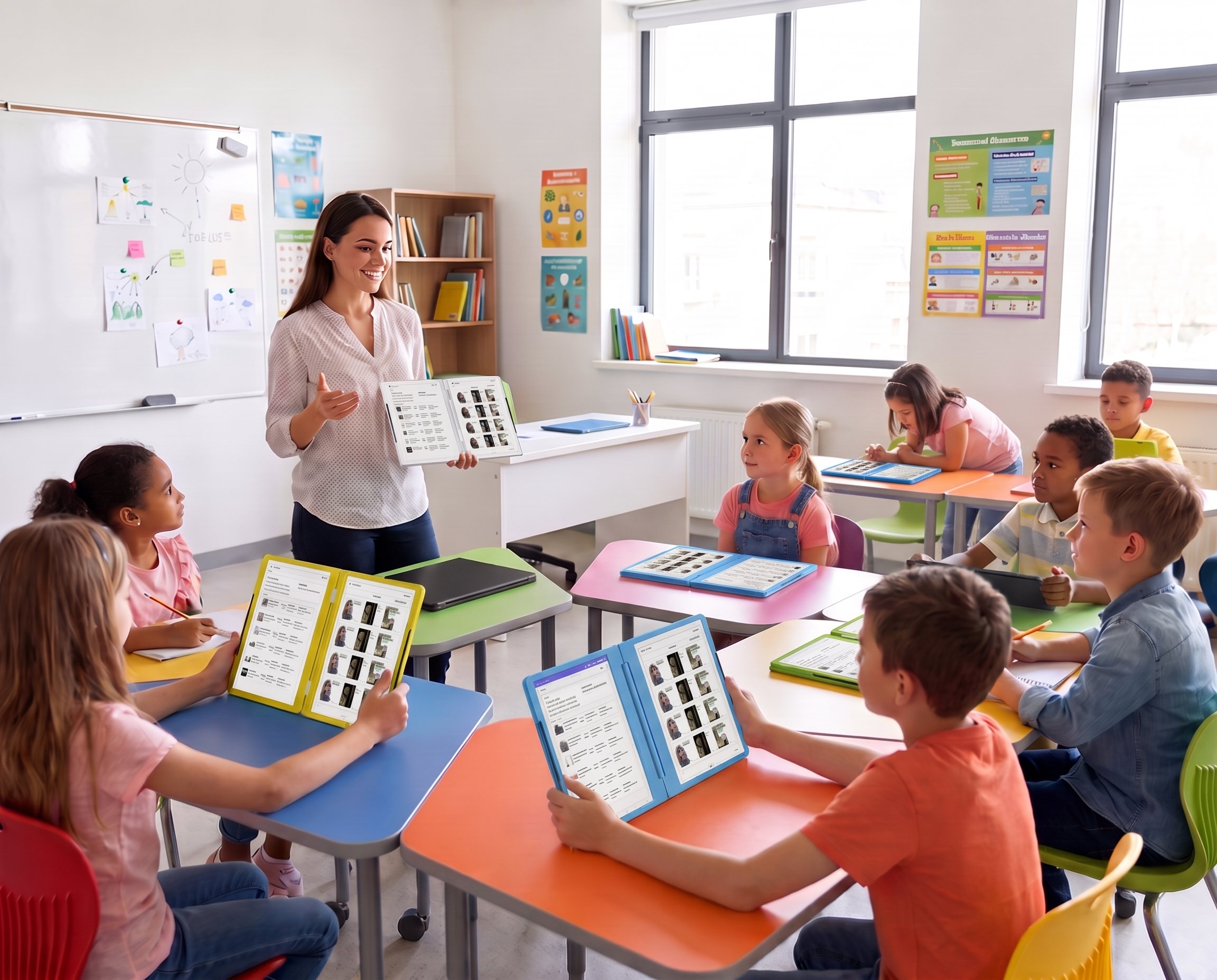
A teacher holding a READTYCH Digital Book in front of a class of students using their own devices.
Chapter IV

What a READTYCH Pilot Can Explore

The exact pilot experience will depend on product readiness and the institution’s goals. Not every pilot needs to evaluate every feature.

A focused pilot often provides stronger evidence than a larger program trying to test everything at once.

01

The Two-Screen Learning Experience

Students may keep a textbook, lesson, question, or instruction visible on one E-Ink screen while using the second to take notes, solve a problem, compare information, or complete an assignment.

The pilot can help determine whether this experience feels natural and whether it reduces unnecessary switching during learning.

02

Digital Reading and Handwriting

Students may use the Digital Book for reading, annotations, notes, diagrams, calculations, and written responses.

Educators can evaluate readability, stylus responsiveness, note organization, and how the experience fits different subjects.

03

Classroom Workflows

Teachers may prepare or select activities, connect learning materials, distribute assignments, review student work, and provide feedback through the READTYCH environment.

The pilot can reveal which parts feel useful, which steps need to be simpler, and how much training educators require.

04

Books, Content, and Educational Applications

Participating institutions may explore how approved books, curriculum materials, and educational applications should be organized inside the platform.

This can help define publisher, licensing, application, and content requirements before wider adoption.

05

Learning Analytics

Where appropriate permissions and safeguards are in place, authorized users may evaluate student-, classroom-, school-, or district-level analytics.

The pilot should examine whether the information is understandable, provides enough context, and helps someone take a useful action.

06

AI-Assisted Tools

Selected workflows may include handwriting recognition, grading suggestions, feedback support, or learning-pattern identification.

AI-generated suggestions remain subject to educator review. Teachers continue to make academic decisions.

Chapter V

Who Should Consider a Pilot?

The READTYCH Pilot Program is intended for organizations that can provide a genuine education environment, a defined objective, and people willing to participate in the evaluation.

01

Schools and Charter Networks

An individual school or charter network may explore how the Digital Book fits into selected classes, subjects, and educator workflows.

A focused school pilot can help evaluate student use, educator adoption, classroom fit, and the support required around the technology.

02

School Districts

Districts may begin with a small number of participating schools, grade levels, or subjects before considering a broader program.

The pilot can help district leaders understand implementation, educator preparation, technical requirements, institutional controls, and potential value across different schools.

03

Governments and Education Departments

Public-sector organizations may use a focused pilot to explore student access, educator support, digital content, analytics, or connected learning across different education environments.

Starting with a defined group allows the program to learn before making decisions about wider deployment.

04

Universities and Research Partners

Academic institutions may study digital reading, handwriting, two-screen learning behavior, product usability, educator adoption, accessibility, responsible analytics, or other agreed research questions.

The program is not currently intended as an individual consumer product trial.

Students and families interested in READTYCH may follow product updates or encourage their school to begin a conversation.

Chapter VI

What Makes an Institution Ready?

READTYCH is looking for institutions prepared to participate in shaping the experience, not simply receive devices.

A strong pilot partner usually has a clear educational goal, an internal leader to support the program, educators willing to participate, and a technical contact to help with infrastructure and access.

The institution should also be willing to begin with a manageable scope.

A pilot involving one subject, grade level, or group of classrooms can provide more useful evidence than a rushed deployment across an entire district.

Most importantly, the institution must be prepared to speak honestly.

READTYCH needs to understand what worked, what created difficulty, what educators avoided using, what students found confusing, and what should change before more people are involved.

A useful pilot is not one where everyone says the product is perfect.

It is one where everyone learns what could improve it.
Chapter VII

When a Pilot May Be Too Early

A pilot may not yet be the right next step if an institution requires immediate large-scale deployment, guaranteed academic outcomes, or access to every capability in the wider READTYCH roadmap.

It may also be too early if there is no internal sponsor, no participating educator group, or no capacity for technical and privacy review.

That does not close the door to a future relationship.

It simply means the first conversation should focus on readiness, requirements, or long-term planning rather than immediate classroom use.

Chapter VIII

How the READTYCH Pilot Process Works

Every pilot will be shaped around the institution, but the process should remain clear.

Chapter IX

Phase 1: Understand the Environment

The first conversation is about the school or education system, not the device.

READTYCH learns about the educational need, participating users, existing technology, curriculum, connectivity, internal decision-making, privacy requirements, and evidence the institution will need at the end.

This stage helps both sides determine whether the proposed opportunity aligns with the current product direction.

Outcome: A clear understanding of the need and initial pilot fit.

Chapter X

Phase 2: Design the Pilot

If the opportunity is suitable, READTYCH and the institution define what the pilot will evaluate.

The pilot plan may identify participating schools, students, and educators; subjects, use cases, and product capabilities; content; technical requirements; training and support; duration; and measures of success.

Privacy, data, device ownership, commercial terms, and post-pilot responsibilities will also be agreed before participation begins.

The goal is not to make the pilot large.

It is to make it useful.

Outcome: A written pilot plan with defined responsibilities and success measures.

Chapter XI

Phase 3: Prepare the People and Technology

Before READYCH enters the classroom, the surrounding environment needs to be ready.

Devices and accounts may need to be configured. Content and approved applications may need to be prepared. Networks, permissions, support contacts, and privacy documentation may need to be reviewed.

Educator onboarding will focus on the classroom activities included in the pilot rather than attempting to explain every future platform feature.

Teachers should leave the preparation stage knowing what they are expected to use, how it connects to their work, and where to go for help.

Outcome: Educators, systems, and devices are ready for the agreed use case.

Chapter XII

Phase 4: Use READTYCH in the Classroom

Students and educators begin using READTYCH within the selected lessons, subjects, or activities.

The experience may include reading, handwriting, assignments, educational applications, feedback, or appropriate analytics.

During this stage, READTYCH and the institution gather focused observations about usability, device performance, classroom fit, technical issues, training needs, and participant experience.

The goal is not to surround the classroom with constant measurement.

It is to listen closely enough to understand what is happening.

Outcome: Real classroom evidence instead of assumptions.

Chapter XIII

Phase 5: Evaluate and Decide

At the end of the pilot, the institution and READTYCH review the agreed measures of success.

They consider what students and educators experienced, how the technology performed, which workflows were adopted, what support was required, and what should change.

The evidence may support a wider rollout.

It may suggest another focused pilot.

It may show that certain features need improvement.

It may reveal that the institution needs more preparation before expanding.

A pilot is successful when it produces a clearer decision, even if the decision is not immediate scale.

Outcome: A documented understanding of what should happen next.

Chapter XIV

What READTYCH Brings to the Pilot

READTYCH’s responsibilities will depend on the agreed scope and will be documented in the pilot plan.

Depending on product readiness, READTYCH may provide an agreed number of devices, access to selected platform capabilities, setup guidance, educator onboarding, technical support, and assistance with evaluation.

The product team may also create structured ways for educators, administrators, and students to share feedback.

The pilot agreement will confirm the devices, features, support levels, response expectations, replacement arrangements, and access period included in the program.

Chapter XV

What the Institution Brings

The participating institution provides the environment in which the technology can be understood properly.

That usually means identifying an internal leader, participating educators, and a technical contact. The institution may also need to arrange approvals, privacy review, student or family notices, network access, and classroom time.

Educators and administrators should be willing to attend onboarding sessions, use the agreed-upon workflows, report problems, and participate in evaluations.

The pilot works when both sides treat it as a shared learning process.

READTYCH brings the product.

The institution brings the reality the product must be ready to meet.

Chapter XVI

How Pilot Success Should Be Measured

Success should be defined before devices enter the classroom.

01

Student Experience

Can students understand the Digital Book and use both screens naturally? Do reading, writing, and assignment activities feel clear?

02

Educator Experience

Can teachers use the selected tools without unnecessary difficulty? Does the platform fit the way lessons and classroom work actually happen?

03

Product Performance

Do the device, E-Ink screens, stylus, software, battery, connectivity, and synchronization perform reliably enough for the agreed use?

04

Workflow Fit

Do books, notes, instructions, assignments, responses, and feedback remain meaningfully connected?

05

Institutional Readiness

Can the school or district support a broader program through its staff, infrastructure, policies, training, privacy practices, and technical resources?

06

Product Learning

What should READTYCH improve before more students and educators become involved?

Academic outcomes should be evaluated only when the pilot design, duration, sample, and research method support a responsible conclusion.

A short pilot should not make promises the evidence cannot support.

Chapter XVII

Pilot Pricing and Commercial Terms

Pilot pricing is determined individually because device quantities, software access, training, support, content, applications, onsite services, and evaluation requirements will vary between institutions.

Before participation begins, the written pilot agreement will explain costs, payment, device ownership, software access, support, replacements, confidentiality, data use, and what happens at the end of the pilot.

No institution should have to discover the important terms after the devices arrive.

Chapter XVIII

Before You Apply

You do not need to prepare a formal proposal.

The pilot inquiry should simply help READTYCH understand who you are, what you want to explore, and whether the opportunity fits the company’s current readiness.

Useful information includes your institution, location, role, educational goal, approximate number of participants, grade levels, preferred timeline, existing technology, connectivity conditions, and how you would define success.

The clearer the need, the more useful the first conversation can be.

Chapter XIX

(FORM)

What Happens After You Submit?

READTYCH will review the inquiry to understand whether the proposed need aligns with current product capabilities, development timelines, and pilot readiness.

If the opportunity appears suitable, the team may invite your institution to an initial discovery conversation.

That conversation is not a commitment from either side.

It is a chance to understand the opportunity, identify unanswered questions, and decide whether to continue pilot planning.

Submitting the form does not guarantee acceptance.

It begins the evaluation.

Confirmation Message

Thank you for introducing us to your institution and the challenge you want to explore.

The READTYCH team will review your inquiry and determine the most useful next step. If the opportunity aligns with current pilot readiness, we will contact you to continue the conversation.

Chapter XX

Frequently Asked Questions

Who can apply for a READTYCH pilot?

Schools, charter networks, school districts, government education departments, universities, researchers, and relevant educational organizations may submit a pilot inquiry.

How many students can participate?

The appropriate number will depend on product readiness, available devices, the classroom use case, educator involvement, technical requirements, and evaluation goals.

How long does a pilot last?

The pilot duration will be agreed upon during planning. It should be long enough to evaluate the selected workflows without expanding beyond what the institution and READTYCH can properly support.

Is the READTYCH pilot free?

Pilot pricing and commercial terms will depend on devices, software, support, content, duration, and evaluation requirements. All costs and responsibilities will be agreed before the pilot begins.

Will student data be used?

That will depend on the capabilities being tested. Appropriate permissions, privacy notices, security requirements, and written agreements must govern any processing of student or institutional information.

Does participating guarantee access to the final product?

No. The pilot agreement and subsequent product decisions will govern pilot access, post-pilot use, commercial availability, and future deployment.

The next page starts here

Let the Classroom Help Shape What Comes Next

A specification can tell us what the Digital Book is designed to do.

A demonstration can show how the platform is intended to work.

Only a real education environment can show what happens when students and educators begin using it.

That is where the useful questions appear.

That is where assumptions become evidence.

That is where the future stops being an idea and begins to learn in the classroom.